Revolutionizing Business Efficiency: Elevating Organizational Accuracy through Robust Error Mitigation Strategies


Enhanced Accuracy

Reduced Human Error

Reducing human error is a critical objective for organizations seeking to enhance accuracy in their operations. Human errors, whether in data entry, decision-making, or routine tasks, can lead to significant consequences. Strategies to minimize human error and enhance accuracy include:

Automation: Introducing automation to repetitive and rule-based tasks reduces the likelihood of human errors. Automated systems follow predefined rules consistently, eliminating the variability associated with manual processes.

Training and Education: Investing in comprehensive training programs ensures that employees are equipped with the necessary skills and knowledge to perform their tasks accurately. Continuous education helps keep employees informed about changes in processes or technologies.

Standard Operating Procedures (SOPs): Establishing clear and standardized procedures for various tasks provides employees with a reference to follow. SOPs reduce ambiguity and help maintain consistency, minimizing the risk of errors.

Checklists and Quality Control Measures: Implementing checklists and quality control measures serves as a double-check mechanism. These tools help identify errors before they escalate, promoting a culture of accuracy and attention to detail.

Technology Integration: Utilizing advanced technologies, such as artificial intelligence and machine learning, can enhance accuracy in data analysis and decision-making processes. These technologies can identify patterns, trends, and anomalies more effectively than manual methods.

Feedback Loops: Creating feedback loops allows for the continuous improvement of processes. Regularly gathering input from employees involved in various tasks helps identify potential sources of error and allows for timely corrective measures.

User-Friendly Interfaces: Designing user-friendly interfaces for software and tools reduces the chance of errors during data input and processing. Intuitive interfaces guide users and minimize the risk of mistakes.

Crisis Management Planning: Having a crisis management plan in place helps organizations respond swiftly and effectively in the event of an error. Preparedness minimizes the impact of errors and facilitates a quicker recovery.

In conclusion, enhancing accuracy by reducing human error requires a multifaceted approach. Combining technology, training, standardized procedures, and continuous improvement strategies creates a resilient framework for minimizing errors and promoting precision in organizational activities.

Revolutionizing Efficiency: The Impact of AI-Powered Automation on Business Operations


In the ever-evolving realm of modern business, staying ahead demands a commitment to cutting-edge technologies. Among these, Artificial Intelligence (AI) stands out as a transformative force. In particular, AI-powered automation is reshaping business operations, providing unmatched efficiency, precision, and scalability. This article delves into the crucial role played by AI-powered automation in streamlining and revolutionizing contemporary business practices.

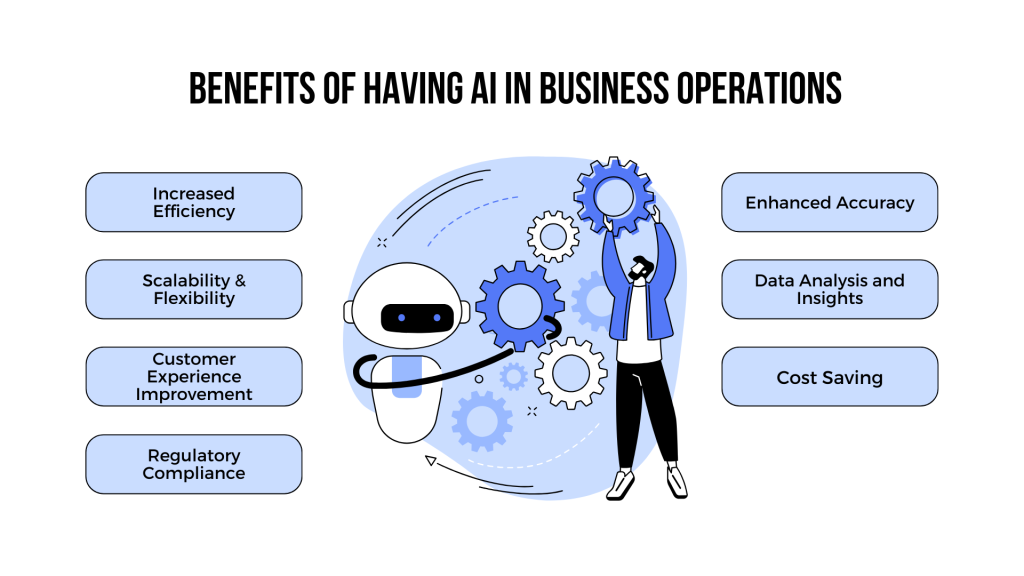
Increased Efficiency:

Task Automation: AI enables the automation of repetitive and time-consuming tasks, freeing up human resources to focus on more strategic and creative aspects of their work. This leads to increased overall efficiency in operations.

Workflow Optimization: AI algorithms can analyze and optimize complex business processes. By identifying bottlenecks and suggesting improvements, automation contributes to streamlined workflows.

Enhanced Accuracy:

Reduced Human Error: Automation minimizes the risk of human errors that can occur during routine tasks. AI systems can perform tasks with a high level of accuracy, leading to improved data quality and decision-making.

Scalability and Flexibility:

Scalable Operations: AI-powered systems can handle a large volume of tasks simultaneously, allowing businesses to scale their operations without a proportional increase in human resources.

Adaptability: AI systems can adapt to changing circumstances and learn from new data. This adaptability makes them well-suited for dynamic business environments where requirements may evolve.

Data Analysis and Insights:

Advanced Analytics: AI excels at processing and analyzing large datasets. By leveraging machine learning algorithms, businesses can gain valuable insights into customer behavior, market trends, and operational patterns.

Predictive Analytics: AI enables businesses to make data-driven predictions, helping them anticipate market trends, customer preferences, and potential challenges.

Customer Experience Improvement:

Personalization: AI-powered automation can be used to personalize customer interactions. By analyzing customer data, businesses can offer tailored recommendations and services, enhancing the overall customer experience.

Chatbots and Virtual Assistants: AI-driven chatbots and virtual assistants provide instant responses to customer queries, improving customer satisfaction and reducing response times.

Cost Savings:

Operational Cost Reduction: By automating tasks, businesses can reduce the need for manual labor and associated costs. This is particularly beneficial for routine, rule-based tasks that don’t require complex decision-making.

Resource Optimization: AI can optimize resource allocation by analyzing data and determining the most efficient use of resources, leading to cost savings.

Regulatory Compliance:

Accuracy in Compliance: AI systems can assist in ensuring compliance with regulations by accurately and consistently following predefined rules. This is crucial in industries where adherence to regulations is a priority.

In conclusion, AI-powered automation is not just a technological advancement; it’s a strategic imperative for businesses looking to stay competitive. By leveraging the capabilities of AI, organizations can streamline their operations, drive innovation, and position themselves for success in the fast-paced and ever-evolving business landscape.